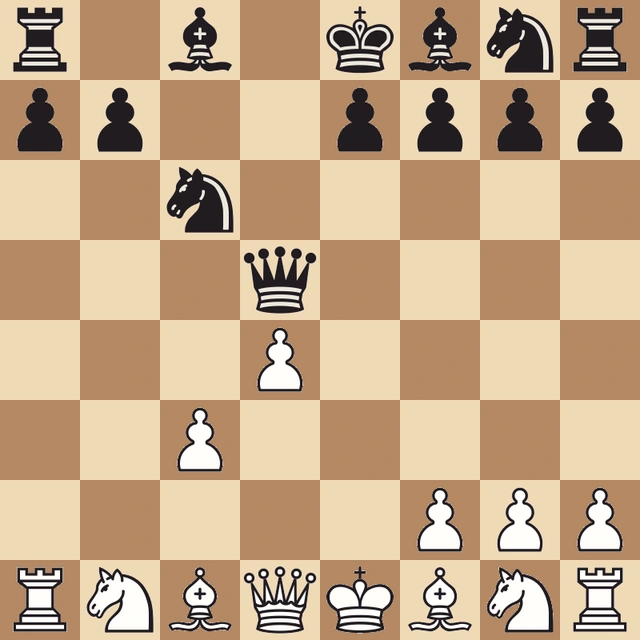
What does a Chess Book look like?
A typical chess book combines written explanations, sequences of moves, and diagrams of the board. Follow the moves in order. When you reach a diagram, the pieces should match what you just played. Start the next sequence from there. In tactics books, the solutions are often at the back so you can try the positions first.
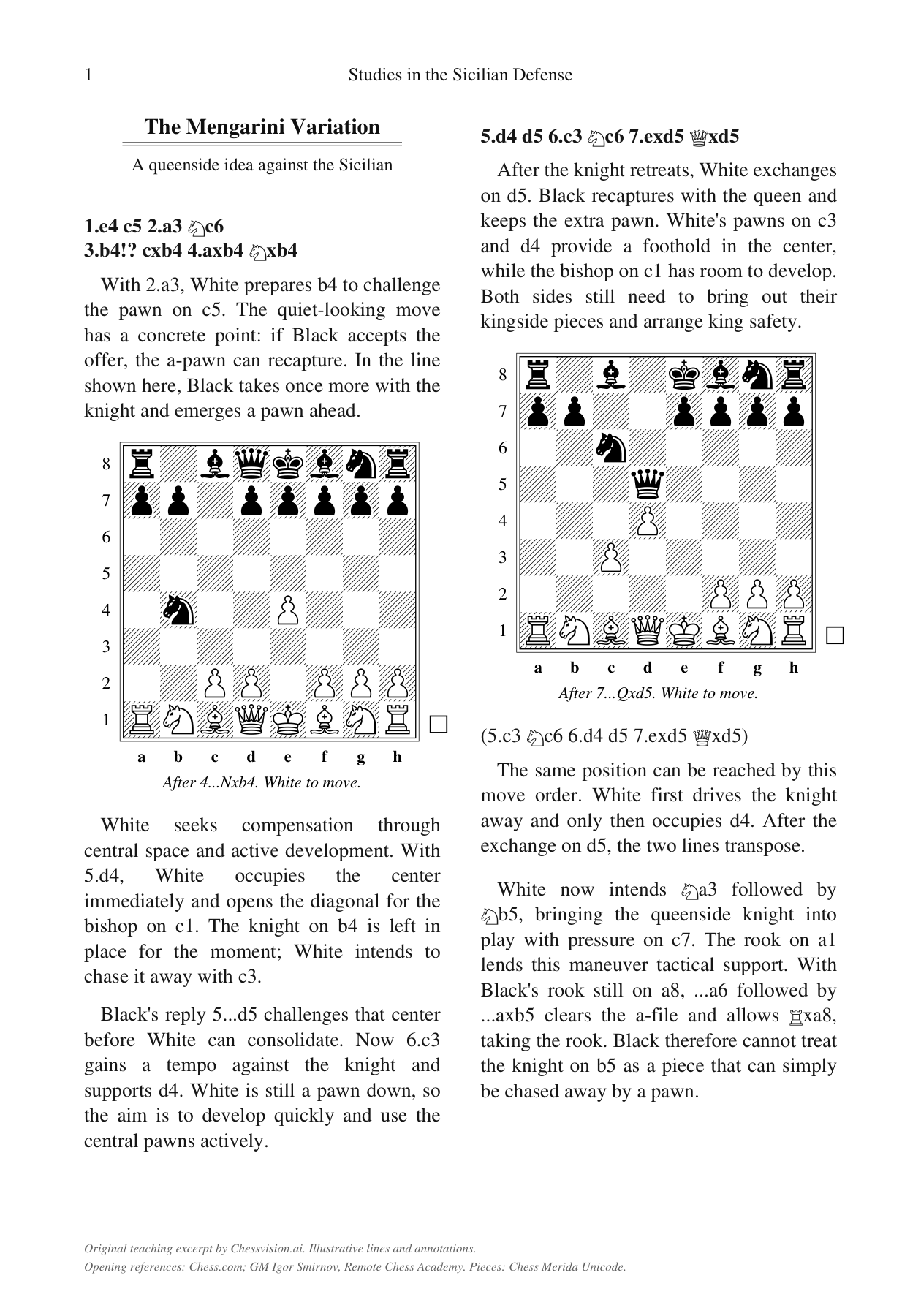
Bold type usually marks the line the author is following. White starts with 1.e4 and Black replies 1...c5.
The pieces are shown after the moves above. Look for the black knight on b4 after 4...Nxb4.
Play 5.d4 from the first diagram. Carry on to 7...Qxd5 and your board should match the second diagram.
An outlined square, dot, or triangle can mark White to move. A filled one marks Black. With no marker, check the moves or the book’s stated default.
An alternative line often appears in regular type or parentheses. Here 5.c3 replaces 5.d4. Both routes reach the same position.
How to read chess notation
Most modern chess books use algebraic notation. The files run from a to h and the ranks from 1 to 8. Nc3 means a knight moves to c3. Pawn moves omit the piece letter. In books that use figurine algebraic notation, you’ll see ♘︎c3 for the same knight move. Chess.com’s guide covers the basics.
For example, 1.d4 d5 2.c4 e6 3.Nc3 Nf6 is a sequence of three moves by each side. White’s move comes first, then Black’s. 1.d4 d5 means White moves a pawn to d4 and Black moves a pawn to d5. Next, 2.c4 e6 moves White’s c-pawn to c4 and Black’s e-pawn to e6. Finally, 3.Nc3 Nf6 moves White’s knight to c3 and Black’s knight to f6. An x means a capture: exd5 is a pawn from the e-file capturing on d5, and Qxd5 is a queen capturing on d5.
The marks after a move are the author’s assessment. Here 3.b4!? marks an interesting pawn offer. A ?! would suggest the author doubts it. ! and !! mark good and brilliant moves, ? and ?? mistakes and blunders. You’ll also see evaluations such as ∞ for an unclear position. Chess annotation symbols
Some older English-language books use descriptive notation. Each side counts ranks from its own end, so 1.P-K4 P-K4 is 1.e4 e5 in algebraic notation. How to read descriptive notation
How to get the most from each book
A diagram captures a single moment. Most of the lesson happens between diagrams, as pieces move and plans change. Keep a board beside the page and give yourself time to try the moves.
- Choose one idea to follow. In the opening example, watch what happens to the black knight on b4.
- Play the main line first. After 6.c3, pause. Which piece is the pawn attacking? Read the author’s explanation after you’ve had a look.
- Give your opponent a move. Before you read on, choose a reply for Black. Compare it with the knight retreat in the book.
- Reset for a sideline. The line in parentheses starts with 5.c3. Go back to the first diagram, where White still has that choice.
- Look up from the book. Can you explain how the two move orders reach the same position? Put the pieces back and try it from memory.
When to use the engine. Leave it off while you’re deciding on a move. Turn it on when you have a specific reply you want to check.
Want to get the most out of your book?
Keep your book open at the diagram. When you wonder whether a different move works, you can play it out on screen and come right back to the author’s line.
Is your book physical or Digital/eBook?
Physical use Chessvision.ai Scanner
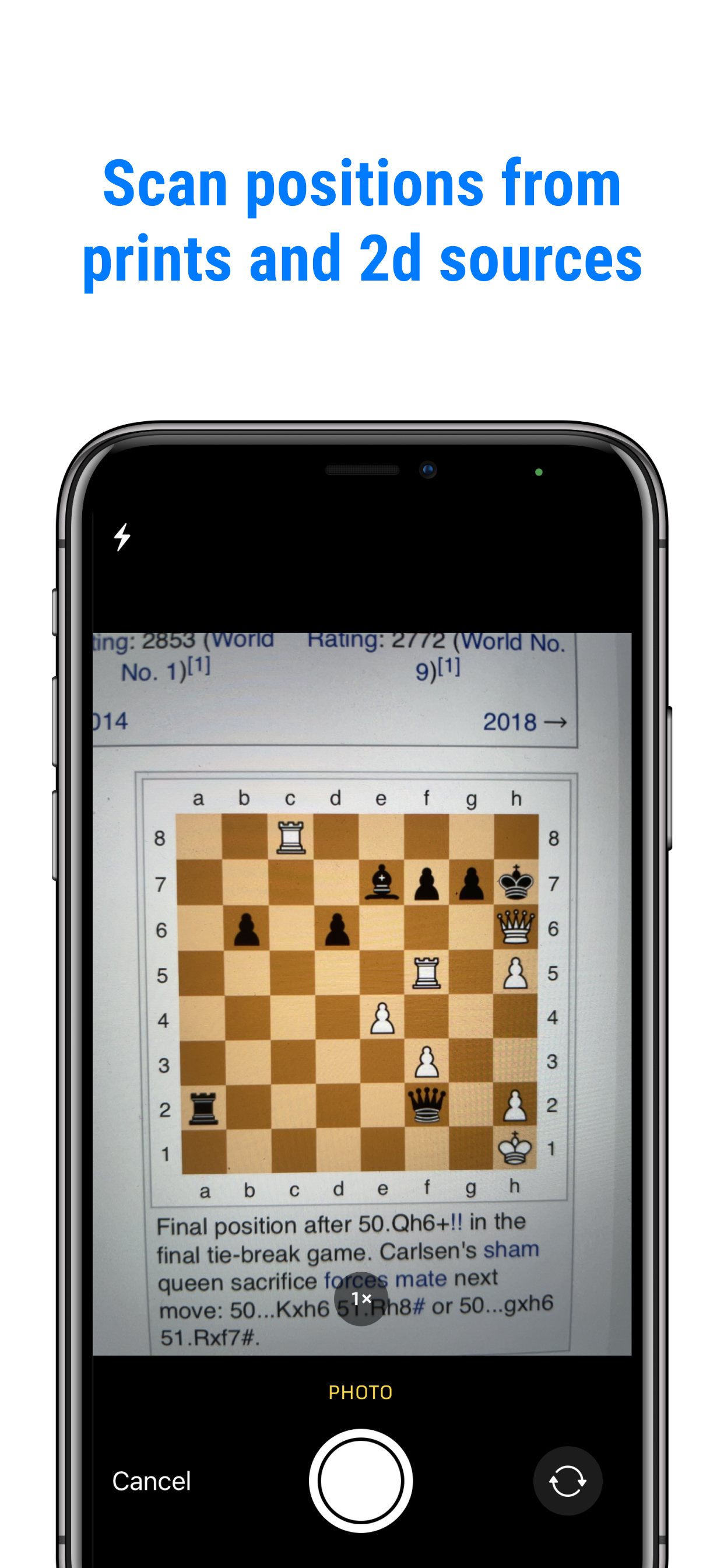
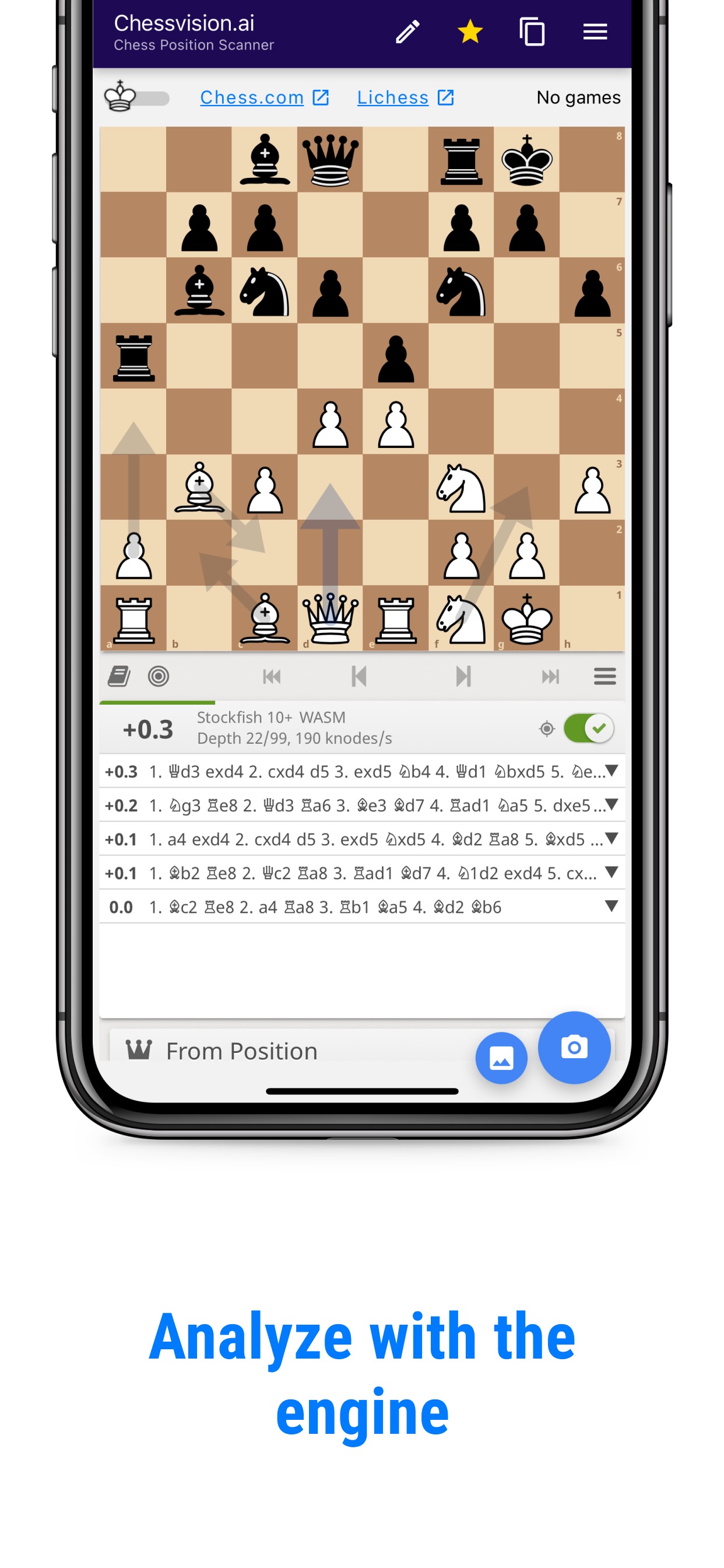
Frame the whole printed diagram in the Scanner and take a photo. Check whose turn it is, then play the main line on your phone or take a move back to try a sideline.
“If I can’t figure out why my variation didn’t work, I take a picture and get the answer within seconds.”
Digital/eBook use Chessvision.ai eBook Reader
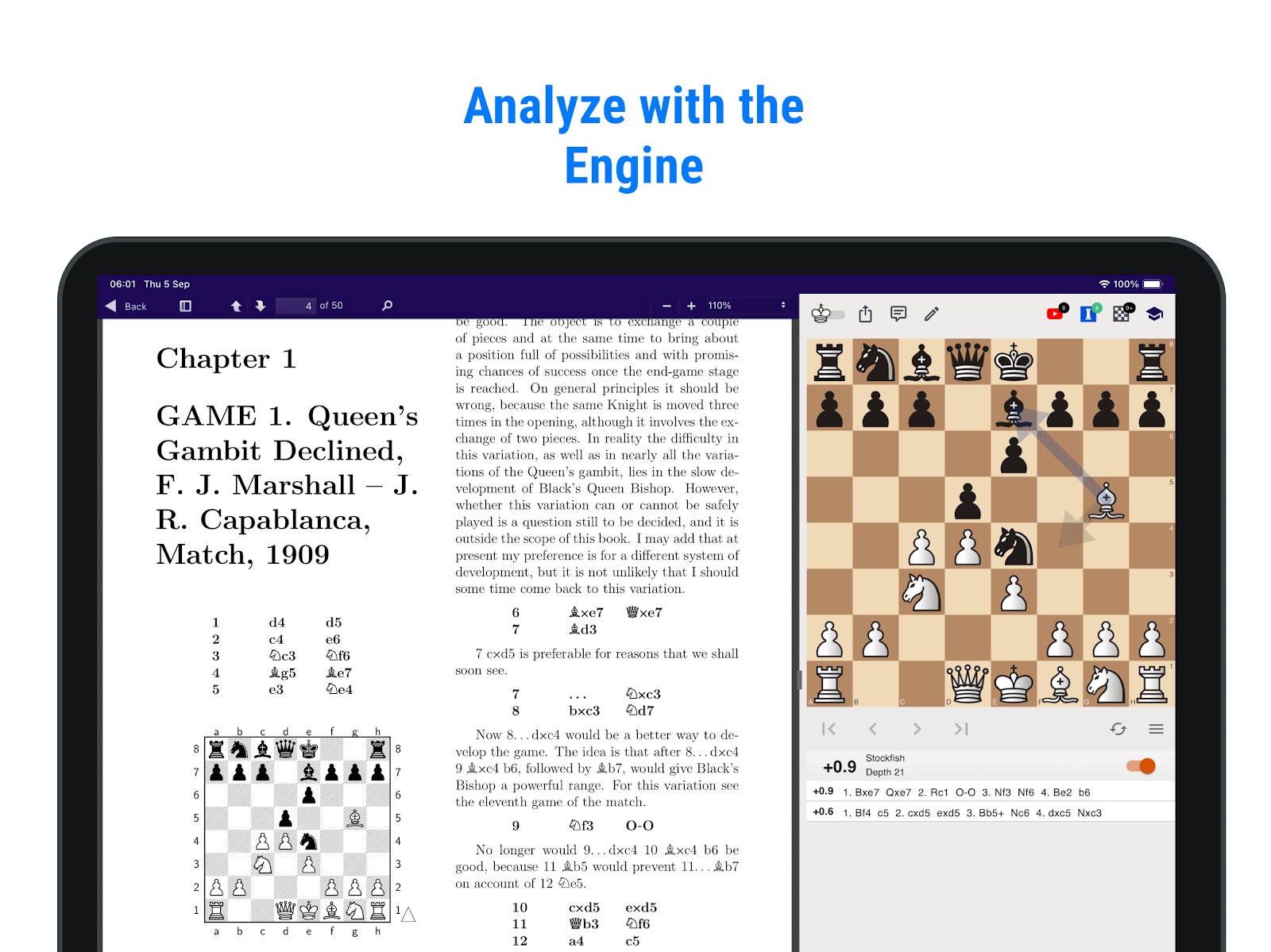
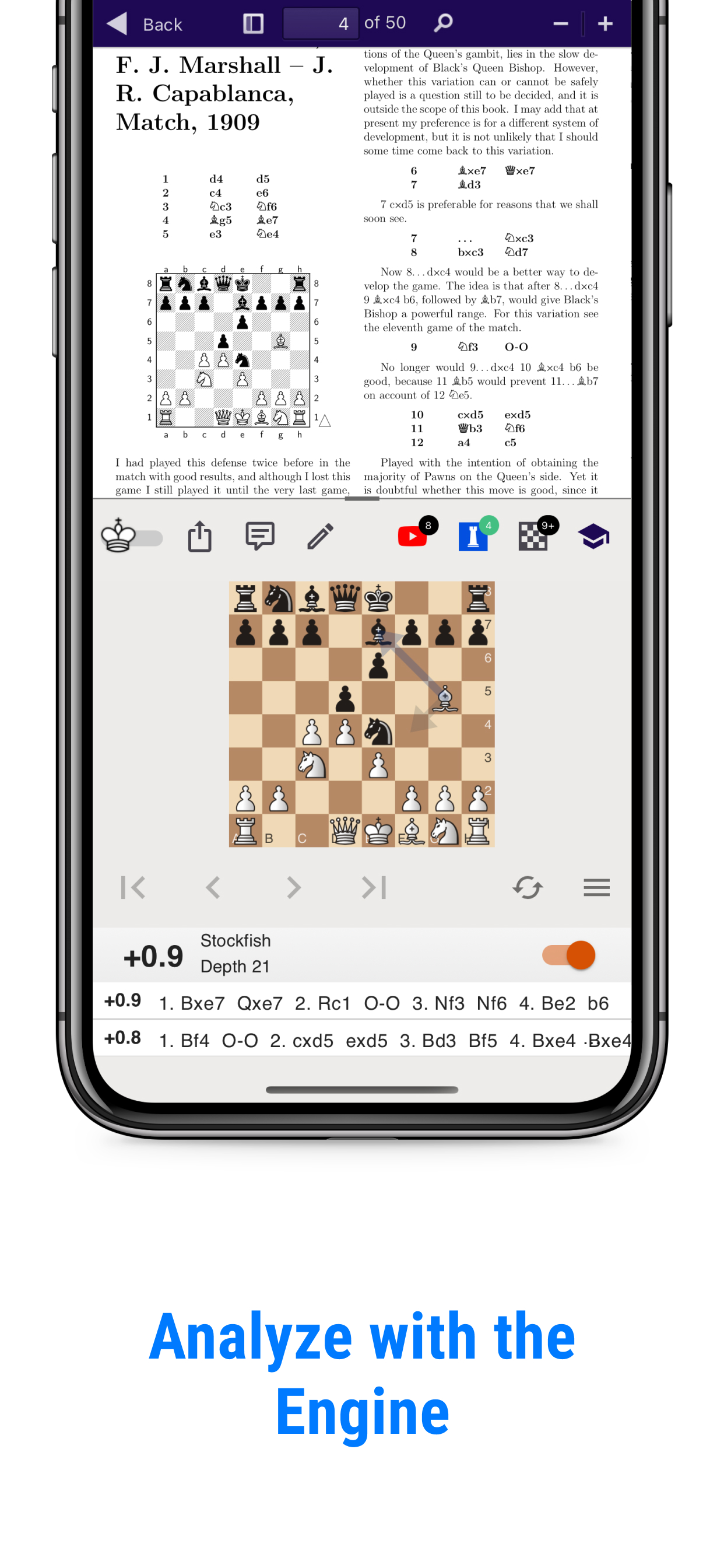
Open your own PDF, ePub, or DjVu book in the Reader. Once a page is processed, double-click its diagram to play the moves beside the text. On a phone or tablet, double-tap.
“A fantastic app that unlocks the power of chess books!”
Types of Chess Books
Choose a book for the part of your game you want to work on. The notation stays the same, but the way you study an opening chapter is different from the way you solve a page of puzzles. Here are four common types, with a few books to explore.
Opening books
Learn how to develop your pieces and reach positions you understand. Follow the main line, then explore the alternatives. Look for the ideas behind the moves so you have a plan when your opponent deviates.
- Discovering Chess Openings John Emms · Opening principles and why the first moves matter.
- FCO: Fundamental Chess Openings Paul van der Sterren · A broad reference to opening systems and their ideas.
Tactics and puzzle books
Learn tactical patterns, then practise finding them yourself. Try to calculate the whole line, including your opponent’s best replies, before moving the pieces or checking the solution.
- Winning Chess Tactics Yasser Seirawan · An introduction to tactical ideas, with examples and tests.
- The Woodpecker Method Axel Smith and Hans Tikkanen · Repeated puzzle sets to build pattern recognition.
Endgame books
Study how to win or draw with fewer pieces on the board. Play through the technique, then reset the position and try it without the book. Practise defending the other side, too.
- Silman’s Complete Endgame Course Jeremy Silman · Endgame lessons organised by playing level.
- 100 Endgames You Must Know Jesús de la Villa · Essential theoretical endings, with explanations and tests.
Strategy and middlegame books
Learn to evaluate a position and choose a plan. Pause at a diagram, look for strengths and weaknesses, and decide which piece you would improve before reading the author’s explanation.
- Simple Chess Michael Stean · Positional ideas explained through master games.
- How to Reassess Your Chess Jeremy Silman · Using imbalances to understand a position and make a plan.
In an annotated game collection, you follow a complete game with commentary. It’s a chance to see an opening plan turn into a middlegame decision and, sometimes, an endgame.